|
The 25th of May marks Yawm al-Muqawamat Waltahrir (عيد المقاومة والتحرير), or Resistance and Liberation Day, in Lebanon͏ ͏ ͏ ͏ ͏ ͏ ͏ ͏ ͏ ͏ ͏ ͏ ͏ ͏ ͏ ͏ ͏ ͏ ͏ ͏ ͏ ͏ ͏ ͏ ͏ ͏ ͏ ͏ ͏ ͏ ͏ ͏ ͏ ͏ ͏ ͏ ͏ ͏ ͏ ͏ ͏ ͏ ͏ ͏ ͏ ͏ ͏ ͏ ͏ ͏ ͏ ͏ ͏ ͏ ͏ ͏ ͏ ͏ ͏ ͏ ͏ ͏ ͏ ͏ ͏ ͏ ͏ ͏ ͏ ͏ ͏ ͏ ͏ ͏ ͏ ͏ ͏ ͏ ͏ ͏ ͏ ͏ ͏ ͏ ͏ ͏ ͏ ͏ ͏ ͏ ͏ ͏ ͏ ͏ ͏ ͏ ͏ ͏ ͏ ͏ ͏ ͏ ͏ ͏ ͏ ͏ ͏ ͏ ͏ ͏ ͏ ͏ ͏ ͏ ͏ ͏ ͏ ͏ ͏ ͏ ͏ ͏ ͏ ͏ ͏ ͏ ͏ ͏ ͏ ͏ ͏ ͏ ͏ ͏ ͏ ͏ ͏ ͏ ͏ ͏ ͏ ͏ ͏ ͏ ͏ ͏ ͏ ͏ ͏ ͏ ͏ ͏ ͏ ͏ ͏ ͏ ͏ ͏ ͏ ͏ ͏ ͏ ͏ ͏ ͏ ͏ ͏ ͏ ͏ ͏ ͏ ͏ ͏ ͏ ͏ ͏ ͏ ͏ ͏ ͏ ͏ ͏ ͏ ͏ ͏ ͏ ͏ ͏ ͏ ͏ ͏ ͏ ͏ ͏ ͏ ͏ ͏ ͏ ͏ ͏ ͏ ͏ ͏ ͏ ͏ ͏ ͏ ͏ ͏ ͏ ͏ ͏ ͏ ͏ ͏ ͏ ͏ ͏ ͏ ͏ ͏ ͏ ͏ ͏ ͏ ͏ ͏ ͏ ͏ ͏ ͏ ͏ ͏ ͏ ͏ ͏ ͏ ͏ ͏ ͏ ͏ ͏ ͏ ͏ ͏ ͏ ͏ ͏ ͏ ͏ ͏ ͏ ͏ ͏ ͏
To those for whom liberation is a promise,
|
|
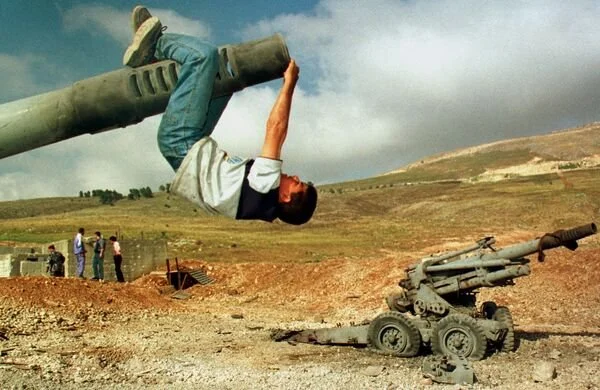
The 25th of May marks Yawm al-Muqawama Wal-tahrir (يوم المقاومة والتحرير), or Resistance and Liberation Day, in Lebanon. On this day in 2000, the “Israeli” military withdrew from the country’s south under the cover of night after a humiliating defeat by the Lebanese resistance, ending a savage 22-year occupation. In their wake, the occupiers left tanks and unused artillery, abandoned villas, and deserted cars alongside the road with keys still in the ignition. Members of the South Lebanese Army (SLA), the fascist military force administering “Israel’s” occupation, fled alongside their colonial patrons—as traitors. They would not be welcome in Lebanon again.
|
|
Victory did not come easily. Thousands of Lebanese youth sacrificed their lives to liberate their homeland from the Zionists occupation. One of them, Sana'a Mehaidli, was only 16 when she drove a car full of TNT into an “Israeli” convoy at a checkpoint in the town of Jezzine, killing two soldiers and wounding two more. Just before her operation, she recorded her will at the video store where she worked: “I am from south of Lebanon. The occupied, oppressed South… I am not the only one who made this decision. I am among a group of individuals who decided to die in order to liberate our land and our people. Because I saw the tragedy of life under occupation: the killing of children, women, and the elderly, the demolition of homes. For these reasons, we decided to commit ourselves to the operations of the feda’iy.”
Western media tends to frame resistance to Zionism in Lebanon as occurring along sectarian lines, but those who suffered through “Israel’s” occupation of the South understand it as a struggle between right and left. Historically, Lebanese supporters of “Israel” have belonged to the country’s Christian elite, a group invested in the Europeanization of Lebanon and the exploitation of its working class. Throughout each chapter of the Zionists aggression in Lebanon—the invasion of 1982, the occupation of the South, the bloody bombing campaign of 2006—these elites scorned those resisting colonial violence, both in Palestine and Lebanon, and cast off the South as a backwater undeserving of protection.
|
|
Today, war rages in the South again. Hundreds have been martyred since October 7. In mid-April, a new settler group called “The Colonization Unit of South Lebanon” hosted an event in “Alonim,” a kibbutz in northern Occupied Palestine to garner popular support for a Zionist invasion of the South (the settlement stands on the former Arab village Qusqus). The group is new; the project is not. Zionism has always been an expansionist regime; its genocidal violence will not stop until “Israel” ceases to exist. And it will cease to exist. For those of us with roots in the South, we have seen the prison walls fall and the enemy scatter in defeat. We know liberation is near because we have tasted it before. We will taste it again.
|
|
As news of “Israel’s” humiliating retreat spread, first through southern Lebanon, then northward to Beirut and throughout occupied Palestine, the people of the land made their way to a village—often bombed by “Israel” in its current assault on Lebanon—called Khiam. Khiam held a prison that bore its namesake; by May 25th, 2000, hundreds of people were detained inside without trial, tortured—in contravention to humanitarian law and basic human dignity—sometimes to death. Some prisoners were alleged to be resistance fighters, others their relatives or friends, taken hostage to pressure someone else to surrender. Khiam was nominally run by the SLA, but functionally overseen by the “Israelis,” who decided when a prisoner should be taken to “Israel” for interrogation, and when Khiam’s methods would suffice.
|
|
Among the most internationally known prisoners held at Khiam, in and out of solitary confinement for a decade, subjected to electric shocks, physical and psychological abuse, medical neglect, everything—and all of which she recounts in her memoir, titled Resistance—is Souha Bechara. Bechara had been arrested for her attempted assassination of the leader of the SLA, Antoine Lahad. She recounts the scene in her memoir: inside Lahad’s house (she was his wife’s aerobics instructor), as news coverage of the First Intifada flooded her auditory background, Bechara fired two bullets: one for the children of the Intifada, and one for her fellow Lebanese, as a message that they, like their Palestinian brothers and sisters, should save their bullets for their “one real enemy,” the occupation entity.
The people of the land liberated Khiam. A video that circulates every 25th of May shows people banging with metal instruments at the locks of metal prison doors. In one cell a slot slides open. First, hands shoot through it, clasped immediately by loved ones on the other side, in preliminary embrace. The prisoners’ hands pull back and through the same rectangular slot a man’s tired face appears. The viewer watches as the recognition of liberation settles into it.
|
|
The epigraph of Bechara’s Resistance reads, “to my parents, to the imprisoned and defiant. To the martyrs. To remember.” In July 2006, “Israel” launched a war on Lebanon (their final operation aptly named, ‘Changing Direction’), ostensibly to rescue two kidnapped IOF soldiers. For 34 days they destroyed Lebanese civilian infrastructure, inaugurating the “Dahiya doctrine” we see accelerated in Gaza today. The “Israelis” failed to rescue their soldiers. Among their countless targets was Khiam prison, which had been remade by the Lebanese into a memorial. As Mary Turfah writes in her review of Bechara's prison memoir, the “Israelis” “destroyed Khiam, physical evidence of what they’d done to individual bodies, creating new evidence in its place. Erasure upon erasure, violence not cyclical but straight line. Across time and across borders.” It is self-evident, watching “Israel” in Gaza (and Lebanon) today, what motivates Zionist actions.
In starkest contrast, Bechara, from her memory of solitary confinement, tells us, “No amount of indoctrination can drive someone to act if that person does not believe in the cause, has not understood it, has not decided to live or even die for it. I knew what was in store, but this knowledge had no power to stop me. When I joined the Resistance, after four years of searching, I did not go alone. My family, my friends, my people—everything that made me who I am—all of it went with me. In the same way, I did not act in my own name as an isolated individual. I felt like all the Lebanese were at my side. [In Khiam,] to have stopped fighting would have been to turn my back on what it means, for all of us, to be human.”
|
Two Films by Jocelyne Saab
|
|
Kaleem Hawa published the following piece in Speciwomen in early March to promote a screening of two films by the Lebanese filmmaker Jocelyn Saab. There is no Lebanese nation, they say to her; it is 1975 Lebanon, the southern border with the Zionist state is a sieve of frontier violence; monopolistic capital is running roughshod over Saida’s fishermen’s unions; former political prisoners are organizing against the felling of berry trees in Tripoli; the tobacco harvests of the south remain an exercise in back-breaking exploitation; the Palestinian camps seethe under the thumb of the criminal peace; a belt of misery surrounds Beirut, with hundreds of thousands of dispossessed forced to watch the shiny cars driving technocrats and Christian fascists to their tennis matches. These were among the conditions that would catalyze a working-class revolution, the perambulatory gusts of the wars that would consume the country for three decades. Jocelyne Saab commits this all to film in her documentary Lebanon in a Whirlwind, which travels across land, speaking to laborers, political leaders, and students. Through interviews and footage of daily life, Saab analyzes the institutions of the Lebanese left and Palestinian resistance as they grow into a popular front against the state, which called for the dismantling of Lebanon’s bourgeois-representative system and a recommitment to anti-colonial struggle against Zionism, Western imperialism, and Arab reaction. In a trim seventy-five minutes, Saab captures the revanchism of class power against people organizing for their survival, which at this particular conjuncture took the name of the “two-year war” (harb as-sanatayn).
|
|
Saab was twenty-seven years old then, already consumed by the stories of precipice and catastrophe across the Arab world, which had become her filmic project. That same year, Saab made Rejection Front, an unsparing documentary short filmed in the tunnels of an underground training camp for Palestinian militants fighting against the conciliatory policies of the then-PLO leader Yasser Arafat. In it, Saab interviews Nayef Hawatmeh, of the Democratic Front for the Liberation of Palestine (DFLP) and Ahmed Jibril, of the Popular Front for the Liberation of Palestine—General Command (PFLP–GC). In the early draft of her shooting scripts, Saab wrote of herself: “Me, personally, I have never handled a weapon, let alone felt the need to buy one or use one. And yet today, I am armed. Armed like the rest of the world.” The question for what haunts the country. Today, as the Zionist and Western imperial powers resume their bombing of Lebanon and the South, as they accelerate their genocide of the Palestinian people, there is one answer. But there are others too, tucked into the folds of a geography of struggle and refusal.
|
|
A Hundred Faces for a Single Day (Christian Ghazi, 1972)
Kafr Kassem (Borhane Alaouié, 1975)
Lebanon in a Whirlwind (Jocelyne Saab, 1975)
Tall el Zaatar (Mustafa Abu Ali, Jean Chamoun & Pino Adriano, 1977)
Beirut, My City (Jocelyne Saab, 1983)
Leila and the Wolves (Heiny Srour, 1984)
The Dream (Mohammad Malas, 1987)
The Freedom Giver (Qais Al-Zubaidi, 1987)
Nightfall (Mohamed Soueid, 2000)
Souha, Surviving Hell (Randa Chahal Sabbag, 2001)
|
Until liberation,W.A.W.O.G.Twitter: @wawog_now Instagram: @wawog_now For press inquiries: press@wawog.com For general inquiries: wawog@wawog.com
|
|
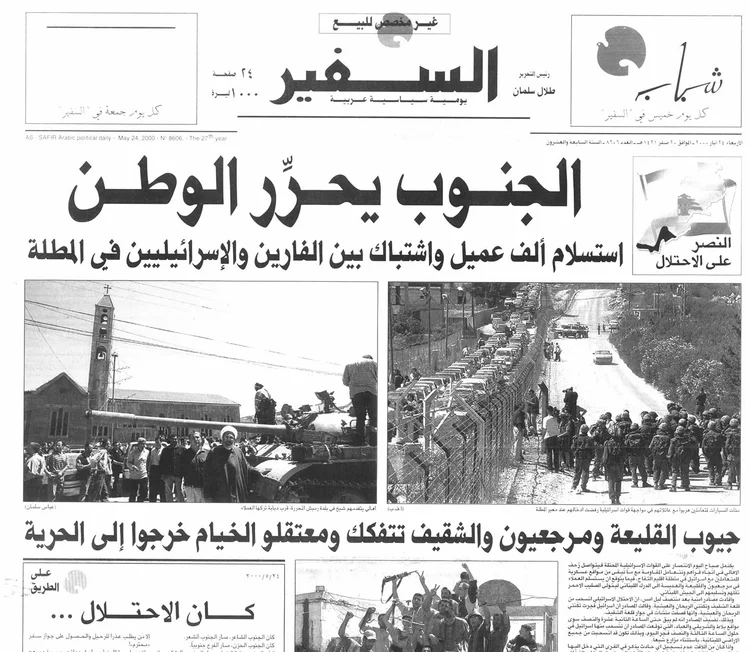
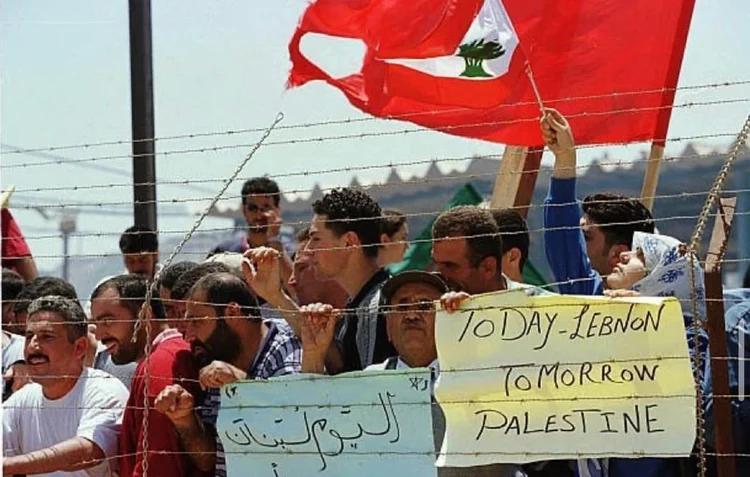
IMAGE CREDITS: 1) Front page of As-Safir newspaper on May 24, 2000. The headline reads: The South Liberates The Homeland 2) A child playing with the military machinery left behind. (AP / Mohamed Zatari) 3) Southerners return to their liberated lands. A sign reads: Today, Lebanon. Tomorrow, Palestine. 4) Villagers dancing in celebration as the Zionist army is pushed out of South Lebanon. 5) People rushing to free the prisoners of Khiam prison. 6) Souha Bechara after her release.
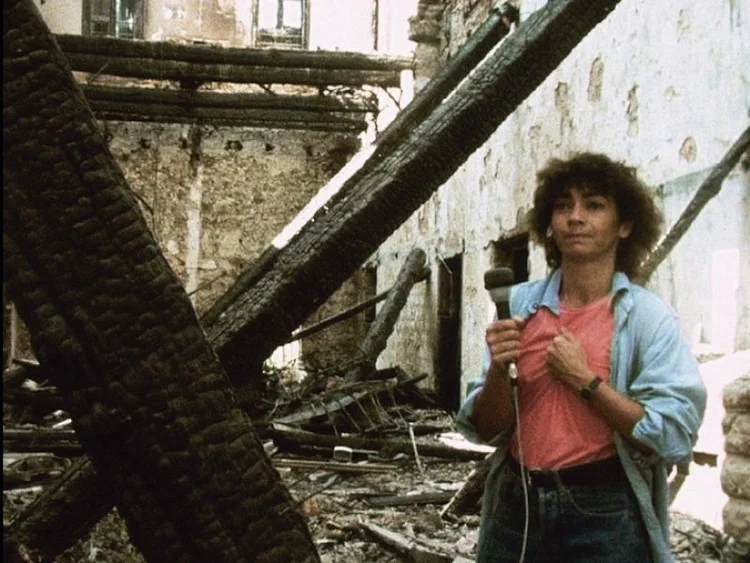
7) Jocelyne Saab in her 1983 film Beirut, My City, at her family home destroyed during the “Israeli” invasion
8) Gazans celebrate the liberation of South Lebanon on May 25, 2000.
|
|
|
|