|
The Nakba has never ended, but the Nakba will end.͏ ͏ ͏ ͏ ͏ ͏ ͏ ͏ ͏ ͏ ͏ ͏ ͏ ͏ ͏ ͏ ͏ ͏ ͏ ͏ ͏ ͏ ͏ ͏ ͏ ͏ ͏ ͏ ͏ ͏ ͏ ͏ ͏ ͏ ͏ ͏ ͏ ͏ ͏ ͏ ͏ ͏ ͏ ͏ ͏ ͏ ͏ ͏ ͏ ͏ ͏ ͏ ͏ ͏ ͏ ͏ ͏ ͏ ͏ ͏ ͏ ͏ ͏ ͏ ͏ ͏ ͏ ͏ ͏ ͏ ͏ ͏ ͏ ͏ ͏ ͏ ͏ ͏ ͏ ͏ ͏ ͏ ͏ ͏ ͏ ͏ ͏ ͏ ͏ ͏ ͏ ͏ ͏ ͏ ͏ ͏ ͏ ͏ ͏ ͏ ͏ ͏ ͏ ͏ ͏ ͏ ͏ ͏ ͏ ͏ ͏ ͏ ͏ ͏ ͏ ͏ ͏ ͏ ͏ ͏ ͏ ͏ ͏ ͏ ͏ ͏ ͏ ͏ ͏ ͏ ͏ ͏ ͏ ͏ ͏ ͏ ͏ ͏ ͏ ͏ ͏ ͏ ͏ ͏ ͏ ͏ ͏ ͏ ͏ ͏ ͏ ͏ ͏ ͏ ͏ ͏ ͏ ͏ ͏ ͏ ͏ ͏ ͏ ͏ ͏ ͏ ͏ ͏ ͏ ͏ ͏ ͏ ͏ ͏ ͏ ͏ ͏ ͏ ͏ ͏ ͏ ͏ ͏ ͏ ͏ ͏ ͏ ͏ ͏ ͏ ͏ ͏ ͏ ͏ ͏ ͏ ͏ ͏ ͏ ͏ ͏ ͏ ͏ ͏ ͏ ͏ ͏ ͏ ͏ ͏ ͏ ͏ ͏ ͏ ͏ ͏ ͏ ͏ ͏ ͏ ͏ ͏ ͏ ͏ ͏ ͏ ͏ ͏ ͏ ͏ ͏ ͏ ͏ ͏ ͏ ͏ ͏ ͏ ͏ ͏ ͏ ͏ ͏ ͏ ͏ ͏ ͏ ͏ ͏ ͏ ͏ ͏ ͏ ͏ ͏
To those who remember and those who fight,
|
|
As we write to you, students at UC Berkeley are occupying an alumni hall to avenge the martyrs of Al Shifa hospital; students at UC Irvine, having similarly taken a lecture hall, are facing down hundreds of riot cops; and 48,000 academic workers in the UC system are going on STRIKE to defend the right to speak up for Palestine. That other world, the one you keep hearing is possible—it's here.
|
|
The Zionist entity began with the Nakba, but the Nakba did not begin in 1948. Decades of planning led to the violent displacement of 750,000 Palestinians from their native land. Zionists colluded with the British to monopolize Palestinians’ resources and economy. Today, IOF soldiers loot the homes of Palestinians and seize their wealth, personal effects, and artifacts. The Nakba, which translates to “catastrophe” in English, is both a distinct historical event—its anniversary is today, May 15—and a pattern rippling outwards and repeating across scales. It has been 76 years since “Israel” began ethnically cleansing Palestine of Palestinians, creating the Zionist entity through dispossession, expulsions, and massacres. The Nakba never ended. Illegal settlements, massacres, incarceration, starvation, blockades, military surveillance, and the destruction of infrastructure constitute the everyday life of Palestinians: a daily Nakba. “Israel” goads, it taunts, it mass murders, and yet it still insists on its innocence, skewing morality to impose its settler fantasy. But this false image will not endure. The Zionist entity began with the Nakba, and the continuation of the Nakba will bring about its end. The seeds of its own demise—a steadfast and growing resistance—have been planted by its violent escalations. The current war on Gaza, a mirror of the initial catastrophe of 1948, portends Zionism in its death spiral. In November, Likud Minister Avi Dichter, like many other state officials, announced that “Israel” was rolling out a “second Nakba.” Indeed, the images that come across our phone are devastatingly similar to the historical images of 1948. Palestinians carrying their belongings from invaded villages in ‘48 are congruous with Palestinians moving from North to South Gaza. Palestinian elders who survived the first Nakba and its afterlife are now experiencing it again in Gaza. The legacy of Deir Yassin continues in the violent dispossession of people in Jabalia. Not only is the Nakba continuous and self-cannibalizing, it is also circular, and it lays the settler-colonial project of Zionism bare: to annihilate the Palestinian people and annex their land. The Nakba repeats itself. Palestinians resisted these colonial forces throughout the 1920s and 1930s. Much of the peasant class participated in a general strike in 1936 to protest Zionist encroachment. As Ghassan Kanafani wrote in his study of the strike, it engaged all sectors of the Palestinian economy—agriculturalists, municipal workers, shopkeepers—and posed the first significant threat to Zionism in Palestine. We are seeing these same tactics employed today. Since October, mass movements have taken up the longstanding tactics of boycotts and global strikes used to put pressure on all the extensive affiliates of Israel, the capitalist circuitry that sustains the Zionist project, continuing this long history of worker organizing to destabilize the Zionist infrastructure.
|
|
The largest exodus occurred in 1948, when Zionist gangs like Irgun and Lehi descended on hundreds of Palestinian villages, slaughtering people and intimidating neighboring villagers to flee their homes. In Nakba and Survival, his history of these events, Adel Manna quotes founding prime minister David Ben-Gurion: “There is only one task left for the Arabs in Israel, to run.” Manna goes on to describe what happened in the village of Majd al-Krum, which Zionist soldiers believed to be hiding weapons: “Muhammad al-Hajj watched the soldiers blow up his house before his eyes were bound and he was shot in al-‘Ayn Square in front of hundreds of men sitting on the ground. The officer continued carrying out his threat; he would issue orders to a six-man firing squad to execute a young man about every half hour, and in this way four more were killed, one after the other.”
Israeli consciousness rejects the Nakba because it exposes the fragility of the Zionist project, which relies on an imagined reality that emulates the U.S. empire’s settler history and requires propaganda to dilute the truth. A 2011 Knesset law, for instance, prohibits the teaching of the Nakba, but the Nakba needs no teacher—the collective memory remains, and the documentation is clear. You cannot erase an entire population and culture that is older and more Biblical than Christ himself. The Nakba, then, refutes the Israeli national mythology of a war for independence. “Israel’s” national identity can only be achieved through Palestinian dispossession and extermination. Zionism imposes its genocidal architecture to remove Palestinians, and literally Palestine itself, from the map.
|
|
The current war on Gaza is an acceleration of the Nakba, furthering the Zionist project of Palestinian dispossession and death. “Israel” had to have built the wall before the resistance could smash through it with a bulldozer. The Resistance Operation of Al-Aqsa Flood on October 7th was produced by decades of Zionist terrorism—the assaults on Gaza tracing back from 2021 to 2014, 2012, 2008; the Great March of Return; the First and Second Intifadas; the Deir Yassin, Sabra, and Shatila Massacres; the continuous desecration of the Al-Aqsa Mosque; the illegal settlements that displace Palestinian villages; the mass incarceration of Palestinians in the West Bank. The international silence that gives “Israel” its impunity belies the reality that history is no longer determined by the aggressor. Palestine has made us all rigorous fact-checkers and historians. Our determination comes from knowing the truth.
Over the last 222 days, the destruction of Gaza has been unfathomable. To date, official reports state that 40,000 Palestinians have been killed by drone strikes, white phosphorus, and sniper bullets (although that number is much higher since the infrastructure to count the dead has been decimated). 90,000 are injured and many thousands are missing, presumed to be either under the rubble of buildings or in mass graves yet to be uncovered. More than two million are internally displaced. On May 10th, the Zionist entity began its ground invasion of Rafah, where more than one million Palestinians are currently seeking refuge after fleeing from the North. Rafah is the southernmost town of Gaza, Egypt has closed its border, and there is nowhere to go to seek refuge from the bombs or troops. Nor, at the time of this writing, can any aid enter the Strip. Zionists have manufactured a famine and drought that continues to kill Palestinians at a staggering rate. But Zionism will end with the Nakba. Despite the military support from the US and the wholesale destruction of Gaza, “Israel'' is losing the war. Hamas has not been defeated. Israel's refusal to accept a ceasefire that would release its hostages has exposed that Palestinian death is more valuable than even Israeli life to the Zionist project. The world has beheld the true face of Zionism, and it has begun to turn away. Colombia, Bolivia, and South Africa, inter alia, have cut diplomatic ties with “Israel;” the ICJ has ruled that “Israel” is plausibly committing genocide; one of Japan’s top trading firms, Itochu Corporation, cut ties with Elbit Systems; Cambridge University’s Trinity College, Union Theological Seminary, and Goldsmiths have voted to divest from all corporations invested in the occupation. The global movement for Palestinian liberation has swelled rapidly in the last few months alone. Consciousness of the Nakba has become massive, as witnesses tune in from everywhere. Public support for Palestine is at an all-time high.
|
|
It is imperative, then, for us to maintain this momentum and escalate towards an end to Zionism and an end to the long Nakba. If Nakba Day calls on us to commemorate and remember, we must also remember that the Nakba is not only a memory; it is also a historical fight. In the face of every Nakba, resistance has persisted. The Nakba has never ended, but the Nakba will end. The politics of memory also require political education about a Palestinian liberation to come. Take back memory and learn from it to make a more collective and liberated future.
Since the Zionist entity began with a Nakba, today and every day is Nakba Day, until the end of the Zionist entity. Zionism is the catastrophe that is bookended by two Nakbas. The gratuitous violence, its accumulation of depravities, is a sign that Israel is holding on desperately to the last strands of occupation and is on the verge of implosion. The death of Zionism is coming. The end is near, and Palestine will be free.
|
Come to the People’s Conference for Palestine
|
|
The Palestinian Youth Movement is hosting a conference in Detroit from May 23 — 26, and we, as in WAWOG, are honored to be one of the convening orgs. Join us for a weekend of plotting, arguing, and movement-building. Register now on the conference website.
|
|
WAWOG’s PACBI committee (pacbi@wawog.com) is reading Lamya H’s memoir, Hijab Butch Blues, and re-reading Fargo Nissim Tbakhi’s beloved essay, “Notes on Craft: Writing in the Hour of Genocide.” Our Communications committee (now@wawog.com) is reading books by authors who pulled out of the PEN America Awards, leading to the cancellation of the entire ceremony and, hopefully soon, the fall of its CEO, Suzanne Nossel. Also, new issues of the New York (War) Crimes. Our Labor committee (labor@wawog.com) mostly reads the news. Lately, they are following the efforts of unionized campus workers to hold their universities accountable, from graduate student workers in the UC System voting on whether to authorize a strike to efforts by UAW rank-and-file members to pressure their union to divest. They are also reading a new Susan Abulhawa essay, “Gaza is our moment of truth.” Our Toronto chapter (toronto@wawog.com) is reading Palestine as Metaphor, a book of interviews with the poet Mahmoud Darwish, and The Declared Enemy, a book of interviews with (and posthumously published texts by) Jean Genet that includes a revelatory interview with both Genet and Leila Shahid; they are also reading Elias Sanbar’s “Out of Place, Out of Time” and Steve Salaita’s “Literary Criticism in a Time of Genocide.” (Salaita’s essay pairs well with Tbakhi’s.) Our Philadelphia chapter (philly@wawog.com) is reading Nur Masalha’s Palestine: A Four Thousand Year History, Nadera Shalhoub-Kevorkian’s Incarcerated Childhood and the Politics of Unchilding, and Conor Tomas Reed’s New York Liberation School. (Watch Reed, speaking at the City College encampment on April 29, call for his fellow teachers to go on strike. On May 1, members of CUNY PSC participated in a historic “sickout.”) Our Los Angeles chapter (la@wawog.com) is reading R.F. Kuang’s Babel, Wisam Rafeedie’s The Trinity of Fundamentals, and Mahmood Mamdani’s 9/11-era study of political Islam and the “war on terror,” Good Muslim, Bad Muslim.
|
|
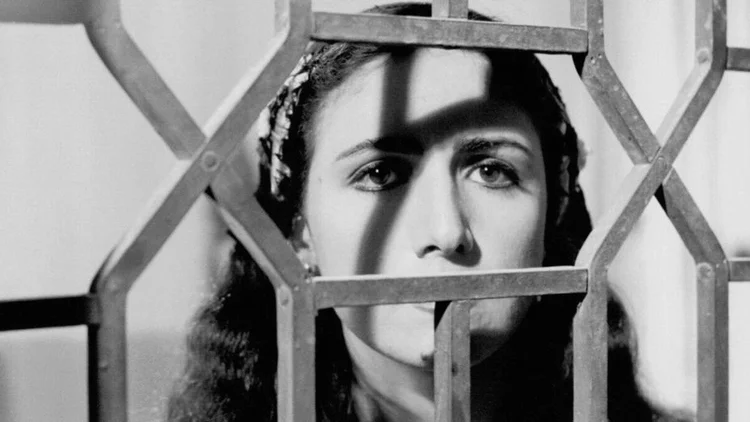
Our New York chapter (nyc@wawog.com) has been having all its meetings at Anthology Film Archive lately. Their series “Cinema of Palestinian Return,” programmed by Nadine Fattaleh and Kaleem Hawa, included Kassem Hawal’s 1982 film Return to Haifa, the first narrative feature made with (almost entirely) Palestinian actors. Many of the cast and crew were recruited from refugee camps in southern Lebanon, where what we would call the cultural front is very close to what you might call the actual front of this struggle. “We undertook what resembled a giant sewing workshop in Badawi camp,” Hawal said of the production, “in which young women of the camp took over sewing clothes for the film. We set up a storehouse for clothes and weapons in the camp.” A scene of mass exodus from Haifa required 4000 men, women, and children in the camp to serve as extras. One volunteer, quoted in a PFLP news report, said: “I was really sick during shooting, but I ran. I ran with all the strength that I had. I took my small grandchildren with me so that we could run together. We were all shaking with emotion, remembering our homeland and dreaming of returning to it.”
Watch Return to Haifa online at palestinefilms.org.
|
Get a copy of the New York War Crimes
|
|
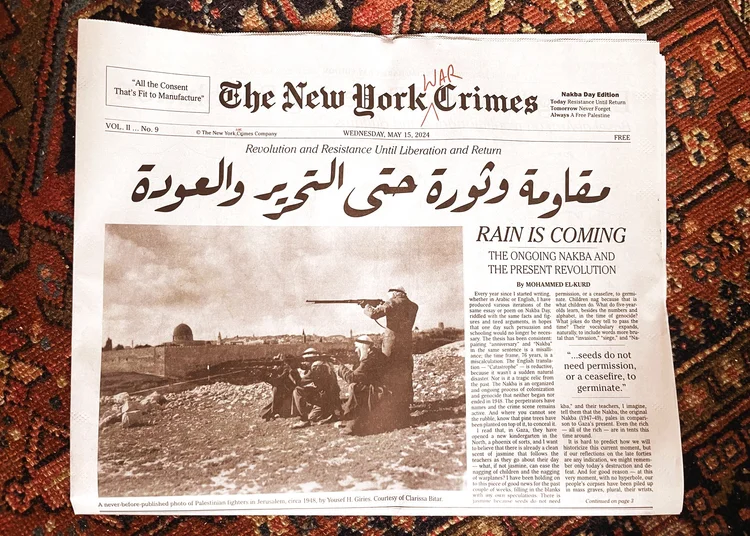
Out now: issues seven and eight of the New York War Crimes, a free paper by and for the movement. Thank you to Slow Factory for their support of issue seven, the special encampments edition. If you live outside New York City and would like copies of the NYWC to distribute in your local organizing spaces, please fill out this form.
|
|
We leave you with the words of Mohammed El Kurd, appearing online at Mondoweiss as well as in the eighth issue, the Nakba Day issue, of the NYWC. He writes, “I read that, in Gaza, they have opened a new kindergarten in the North, a phoenix of sorts, and I want to believe that there is already a clean scent of jasmine that follows the teachers as they go about their day — what, if not jasmine, can ease the nagging of children and the nagging of warplanes? I have been holding on to this piece of good news for the past couple of weeks, filling in the blanks with my own speculations. There is jasmine because seeds do not need permission, or a ceasefire, to germinate. Children nag because that is what children do. What do five-year-olds learn, besides the numbers and alphabet, in the time of genocide? What jokes do they tell to pass the time? Their vocabulary expands, naturally, to include words more brutal than “invasion,” “siege,” and “Nakba,” and their teachers, I imagine, tell them that the Nakba, the original Nakba (1947-49), pales in comparison to Gaza’s present. Even the rich — all of the rich — are in tents this time around. “
|
Until return and liberation,W.A.W.O.G.Twitter: @wawog_now Instagram: @wawog_now For press inquiries: press@wawog.com For general inquiries: wawog@wawog.com
|
|
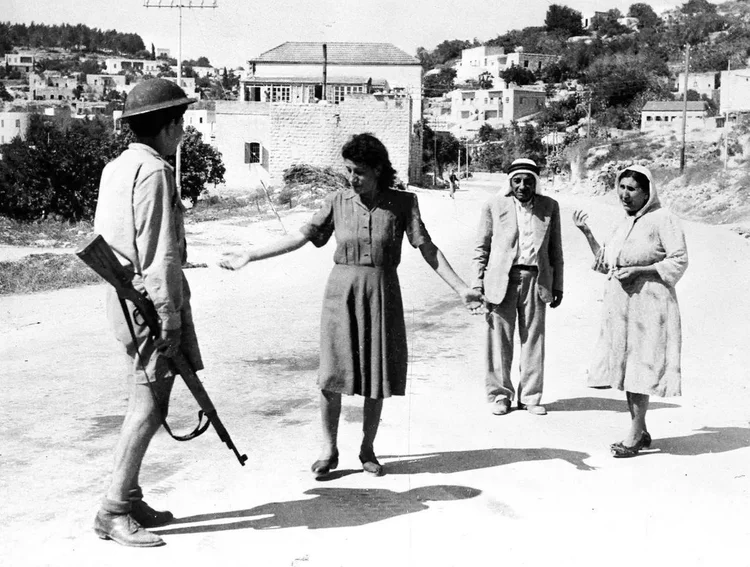
IMAGE CREDITS: 1) Poster with text in Arabic, translated here: The 15th of May is the day of solidarity with the students of the occupied homeland. Oh students of the world, let your voices raise. Let your hands link in solidarity with Palestinian students in the occupied land. (Unknown designer, c. 1989, via Palestine Poster Project.) 2) IOF soldier stops a Palestinian mother and her children in a Nazareth street in what is now occupied Palestine on July 17, 1948. (AP PHOTO.) 3) IOF soldier stops a Palestinian mother and her children in the West Bank, c. 2001. This photograph has been circulated many times and been attributed many different ways, but it is undoubtedly a representation of the ongoing Nakba, whose ongoingness lends truth to even the ‘false’ attributions. This photo could indeed be from 2016 or 2024 or 2008 or 1992. (It has been traced to a 2001 Al Jazeera article, but could be older, just as it could be newer.) 4) A poster by the Australian Union of Students. The poster advertises an on-campus screening of a documentary called “We are the Palestinians.” (Unknown designer, c. 1970s, via the Palestinian Museum Digital Archive.) 5) A still from the 1982 film Return to Haifa. 6) A photograph showing issue eight of the New York (War) Crimes. (Elena Comay del Junco.)
|
|
|
|